

 15 min Read
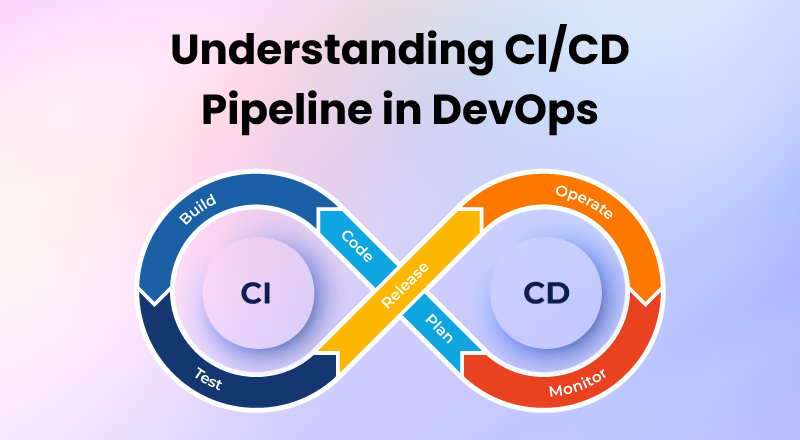
CI/CD stands for Continuous Integration and Continuous Delivery (or Continuous Deployment), and it’s a set of practices and principles used in software development and DevOps to automate and streamline the process of building, testing, and deploying software. CI/CD aims to make software delivery more efficient, reliable, and rapid.
In this article, we’ll get deep into the CI/CD pipeline, see how it relates to DevOps, and explore tools software teams can use in the CI/CD environment.
CI/CD Pipeline:
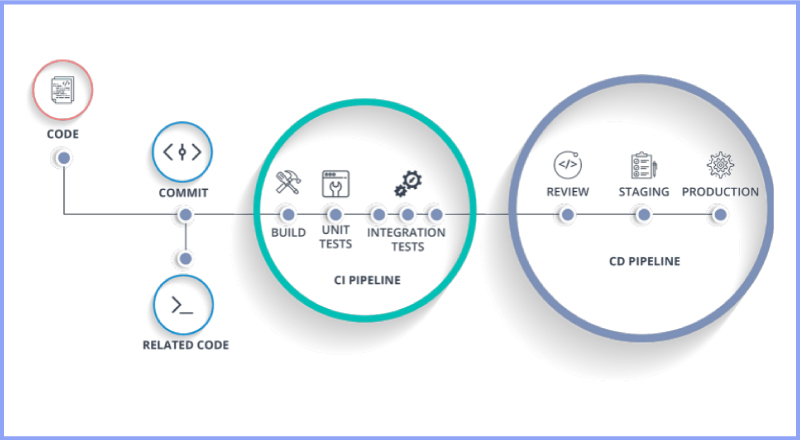
The continuous integration/continuous delivery pipeline is rightly called an agile DevOps workflow; it not only allows teams to adhere to a frequent deployment schedule but also ensures that the builds cater to reliable product releases.
This framework consists of the following:
Continuous Integration (CI):
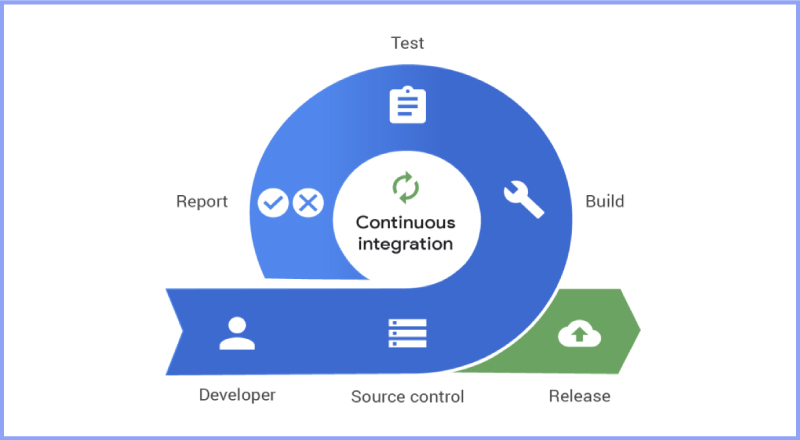
Developers frequently merge their code changes into a shared repository – up to several times daily.
Automated build and testing processes are triggered each time code is pushed.
The goal is to quickly identify and address integration issues.
Continuous Delivery (CD):
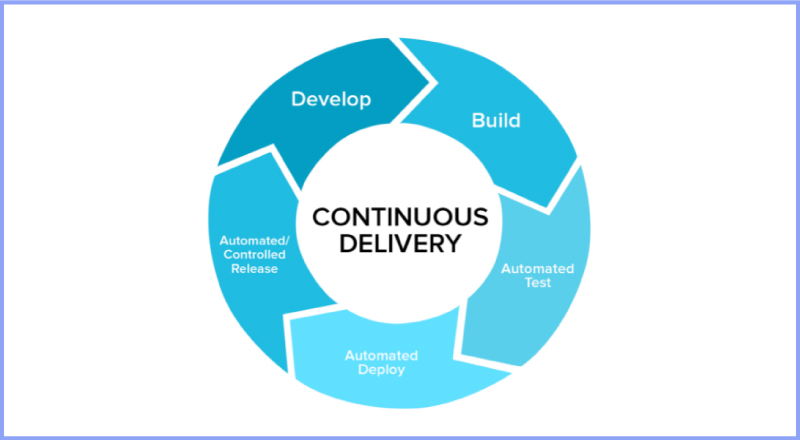
CD extends CI by automating the delivery process up to a staging or pre-production environment.
The software is always in a deployable state.
Manual intervention is often required to promote changes to production.
Continuous Deployment (CD):
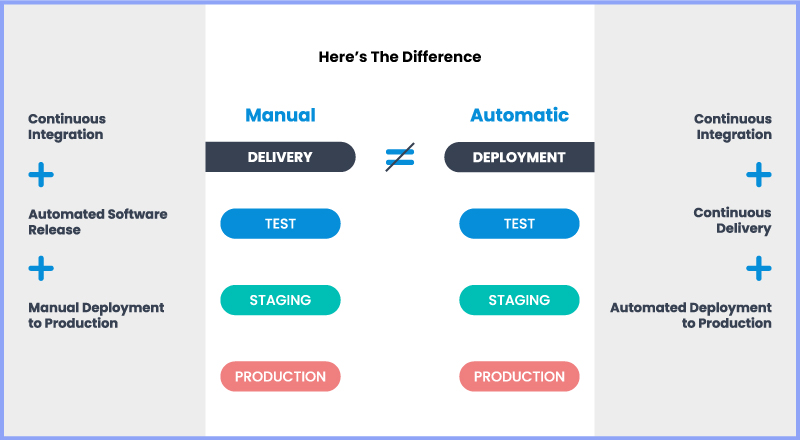
CD goes a step further than continuous delivery by automatically deploying code to production.
Human intervention may still be involved but is minimal, typically for approval or oversight.
The goal is to deliver changes to users as quickly and frequently as possible.
The CI/CD pipeline depends on multiple layers of test automation. Some of the main goals are to:
- Discover and eliminate potential bugs and defects as early as possible.
- Push code changes from multiple developers to different environments.
- Deliver approved changes to the production environments.
- And ensure quality control across all layers, from unit testing to UI testing to non-functional such as performance and security.
A CI/CD pipeline executes the following steps:
Build: This is a continuous integration phase where development teams build off source code and integrate new code.
Test: In both the continuous delivery and deployment stages, software teams test using automated processes.
Deliver: This is an automated stage where the approved code is sent to the production environment. It is carried out with the developer’s approval in continuous delivery and sans human intervention in continuous deployment.
Deploy: The deployment is where the final product is pushed to production.
Benefits of CI/CD Pipeline:
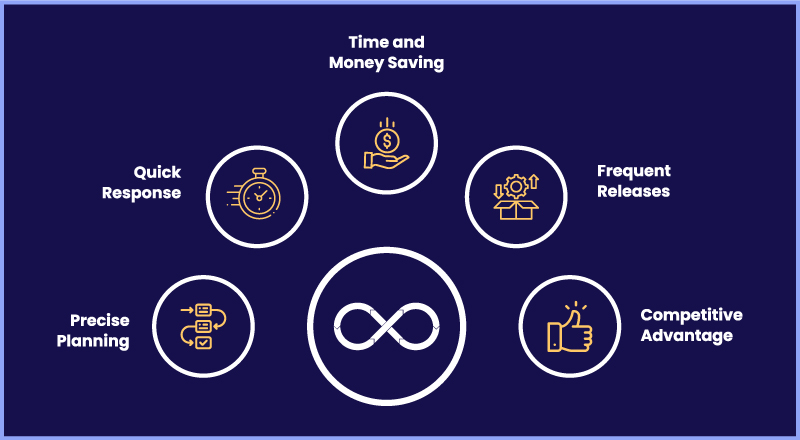
- Faster Development Cycles: It reduces the time between writing code and seeing it in action.
- Improved Quality: Automated testing helps catch and address bugs and issues early in the development process.
- More Reliable Releases: By automating deployment, you reduce the likelihood of human error.
- Greater Collaboration: Developers work more closely and regularly integrate their code.
- Agile and Iterative Development: It supports the release of small, incremental changes.
Security in CI/CD Pipeline:
It is crucial to ensure that software development processes are efficient but also safe and reliable. Here are some key considerations for integrating security into your CI/CD pipeline:
- Code Scanning and Static Analysis:
- Container Security:
- Dependency Scanning:
- Secrets Management:
- Access Control and Authentication:
- Continuous Monitoring:
- Security Testing in Different Environments:
- Security Training and Awareness:
- Incident Response Plan:
- Compliance and Regulation:
- Vulnerability Management:
- Third-Party Integration Security:
- Peer Reviews and Testing:
Where organizations bake security into all phases of the software development life cycle, in a DevOps environment — it is called DevSecOps. It ensures that security protocols are integrated into all DevOps workflows.
Even in the CI/CD pipeline, the security tools must fit seamlessly, to keep pace with DevOps and not lag the development velocity. Packaging security helps organizations catch vulnerabilities early on and helps make informed decisions on risk and mitigation.
Tools for CI/CD Pipeline:
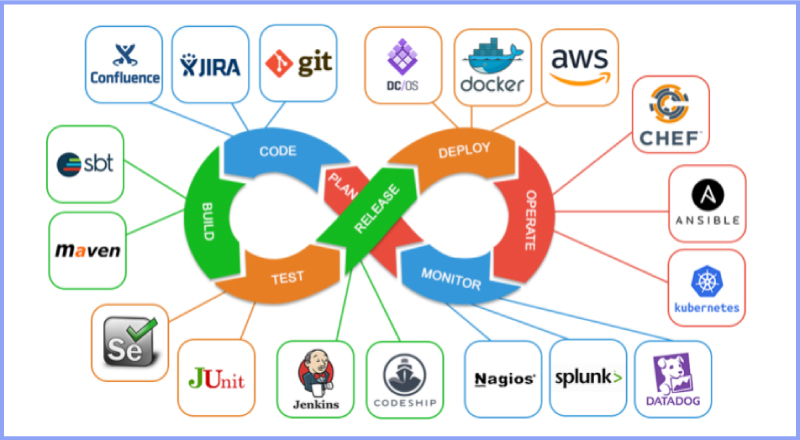
CI/CD tools vary, but some popular options include Jenkins, Travis CI, CircleCI, GitLab CI/CD, Azure DevOps, and AWS CodeBuild.
Containers and container orchestration tools like Docker and Kubernetes are often used to streamline the deployment process. Here’s a list of some commonly used CI/CD tools:
Source Code Management:
- Git: A distributed version control system used for source code management.
- GitHub: A web-based platform for hosting and collaborating on Git repositories.
- GitLab: A web-based Git repository manager that provides CI/CD capabilities.
Continuous Integration:
- Jenkins: An open-source automation server that can be used for building, testing, and deploying code.
- Travis CI: A cloud-based CI service that is easy to set up and configure.
- CircleCI: A cloud-based CI/CD platform that automates the software development process.
- TeamCity: A CI/CD server by JetBrains with support for various programming languages and tools.
Build Automation:
- Maven: A build automation and project management tool, especially for Java projects.
- Gradle: A build automation system that supports multiple languages and platforms.
- Ant: A build tool for Java applications, often used with Jenkins.
Containerization and Orchestration:
- Docker: A platform for containerization, allowing developers to package applications and their dependencies.
- Kubernetes: An open-source container orchestration platform for automating the deployment, scaling, and management of containerized applications.
Interesting Read: Kubernetes vs. Docker Swarm: A Complete Comparison Guide
Testing and Quality Assurance:
- Selenium: An open-source tool for automating web browsers for testing purposes.
- JUnit: A popular testing framework for Java applications.
Postman: An API testing and development tool for building and testing APIs. - JUnit: A testing framework for Java applications.
Artifact Repository:
- Artifactory: A universal binary repository manager for managing dependencies and artifacts.
- Nexus: A repository manager that supports various repository formats, including Maven, npm, and Docker.
Deployment and Continuous Delivery:
- Ansible: An open-source automation tool for configuration management, application deployment, and task automation.
- Chef: An infrastructure as code (IaC) tool for configuring and managing servers.
- Puppet: An IaC tool for automating the provisioning, configuration, and management of servers.
Cloud Services:
- Amazon Web Services (AWS): Offers various cloud services, including compute, storage, and deployment services.
- Microsoft Azure: Microsoft’s cloud computing platform with a wide range of services for CI/CD.
- Google Cloud Platform (GCP): Google’s cloud platform with services for CI/CD, data storage, and more.
Monitoring and Logging:
- Prometheus: An open-source monitoring and alerting toolkit designed for reliability and scalability.
- NewRelic: It is a platform for monitoring and observability.
- ELK Stack (Elasticsearch, Logstash, Kibana): A stack for centralized logging and real-time analysis of logs.
Security and Compliance:
- SonarQube: A platform for continuous inspection of code quality and security.
- Fortify: A static application security testing (SAST) tool for identifying vulnerabilities in code.
Remember that the specific tools you choose will depend on your organization’s needs, the programming languages and technologies you use, and your specific requirements for the CI/CD pipeline. Additionally, many organizations use a combination of these tools to create a customized CI/CD pipeline that fits their unique needs.
Conclusion:
CI/CD is a set of practices and tools that aim to automate and optimize the software development and delivery process, enabling teams to release software faster, more reliably, and with higher quality. It has become a fundamental part of modern software development and is a key component of DevOps practices.CI/CD solves the troubles that arise between development and operations teams while integrating new code.
CI/CD pipeline enables businesses to frequently deliver customer applications and services by introducing automation. This framework begins with continuous integration and moves to continuous delivery and deployment, and continuous testing to validate QA.